


Recently there has been an outbreak of Coronavirus in Wuhan, China. We would like to transfer merits to the deceased and pray for the sick. Our heart is with the medical professionals in the outbreak areas, and we give our blessings to all people in Wuhan. We hope that the epidemic will be brought under control soon, and a cure will be found soon. May Inner peace bring real peace!
Our founder, late Master Sheng Yen’s blessing and admonition for the SARS pandemic in 2003...
Learn more about the NCP relief project >
WORDS OF MASTER SHENG YEN
WISDOM OF THE DAY
  • Blessings and Joy in Abundance - By appreciating our blessings, our life becomes abundant. By repaying the kindness of others, we fill the world with blessings and happiness.
  • Making a vow must begin from within ourselves, starting with our everyday lives. So, what is a good vow? A good vow is one that brings peace, health, happiness, and well-being to ourselves and our families, and extends that same peace, health, happiness, and harmony to our society.
  • Gratitude must be followed by a vow. Without making vows after expressing gratitude, we cannot move forward. Gratitude honors the past; vows aspire toward the future. Making vows means we commit to advancing further upon the foundation we already have.
  • We all navigate this world with imperfect bodies and minds, and through these imperfections, the world inevitably appears imperfect. Even so, we can accept the reality of life with a mentality of receiving retribution while also embracing a mindset of fulfilling vows to improve our lives. This is the correct Buddhist perspective on life.
  • The place where the Buddha attained enlightenment is called the Bodhimanda (Place of the Way). A bodhisattva accomplishes the path to Buddhahood through a straightforward and sincere mind, thus it is said that a straightforward mind is the Bodhimanda. If our mind is honest and upright, filled with sincerity and without deceit, then we are already in the Bodhimanda — the Bodhimanda is within our mind. When the mind becomes a place of the Way, then everywhere outside the mind becomes a place of the Way as well. When our mind is pure, we come to experience that every moment and place in the world is the Pure Land. This is the meaning of the saying: “When the mind is pure, the Buddha land is pure.”
  • Don't limit yourself to a box. One should have a general direction, from the human realm, the heavenly realm, the path of liberation, the path of the Bodhisattva, to the way of the Buddha, transcending from one level to another. Progressing continously from near to far, from small to great, from trivial to significant, with a sense of order and flexibility—this is the standard way and mentality for Buddhists to make vows.
  • Regulating one's mind must start with ensuring there is no conflict or contradiction between one’s previous thought and the subsequent thought. Ony when one's mind can always maintain a peaceful state can one be considered a true practitioner. Anything that corresponds to the afflicted mind such as greed, hatred, ignorance, doubt, or erroneous views, is a defilement. If these afflictions are not eradicated, one's mind will often remain in an unsettled state without one's awareness.
  • Everyone should give rise to pure and great vows for oneself, sentient beings, and the future throughout one's life, and even make the Bodhisattva vow of bearing the continuation of the Tathagata endeavor. Emulating the Bodhisattva's spirit in making, carrying out, and even fulfilling these vows is to wish for a wonderful future for oneself and the world.
  • Although the Dharma body of the Buddha cannot be seen by the naked eyes of ordinary beings, it is possible for anyone to embody it through their own physical and mental actions. Anyone who upholds precepts, cultivates concentration and wisdom, understands liberation correctly, aspires for liberation, and helps others achieve liberation is embodying the virtues of the Dharma body. Similarly, anyone who purifies their life as well as their body and mind is a manifestation of the merits of the Dharma body.
  • The Buddha is no different from us. We already have Buddha nature but do not express the functions of the Buddha. If we have confidence, we won't feel confused and helpless. Once faith is established, we will move forward courageously and work hard to do what we should and can do.
  • Defilements arise because of habitual tendencies. The feelings toward all phenomena in the mundane world are also differentiated by defilements. We should experience everything as established, complete, fresh, and beautiful at all times in all situations. Accepting things with this kind of attitude, one is already a practitioner with wisdom even though one doesn't necessarily see one's nature.
  • There are two phrases regarding the Bodhisattva Path: “Strive towards Buddhahood and transform all sentient beings.” This should be understood as: “Because all sentient beings need the Buddha Way, I will help them seek the Buddha Way. I present the Buddha Way to all sentient beings and use the Buddha Way to liberate all sentient beings.” It is not the “I” who delivers all sentient beings but the Buddha Way that does so.
  • To practice “Spiritual Environmentalism” is to start working on the arising of thoughts when encountering people and things in daily life. The process of practicing “Spiritual Environmentalism” is to reflect on and gradually purify the selfish body and mind to the state of no illness and selflessness. The highest level of “Spiritual Environmentalism” is to go from having Dharma to seek to the state of Buddhahood which is to be devoted to helping sentient beings without seeking and defilement.
  • Making vows is a kind of dedication that seizes the moment and doesn't consider gain or loss. It is a direct acceptance of responsibility. This allows your mind to remain free from the hesitation and struggles of weighing personal interests, and instead take on commitments willingly, steadily, and joyfully.
  • Buddhadharma teaches us to learn the spirit of Buddha. With the power of one's vows, one can always dedicate ourself to help others to fulfill their goals in the world of sentient beings. No matter how many benefits one gains, one only concerns about whether sentient beings gain benefits or not. When one attains perfection in the pracess of benefiting others, one also reach the state of liberation.
  • If one wants to be free, one must first be a responsible person. By being responsible, one has no regrets and worries, and only then is there true freedom. As a resposible person, one must first be responsible for oneself, and then be responsible for others and all living beings.
  • We advocate the idea of a “Pure Land on Earth” which is based on the principle of giving rise to bodhicitta in order to achieve one's own Pure Land to help sentient beings realize their Buddha nature. The purification of the environment is achieved through the purification of people's mind and behaviors. Use precepts and regulations to achieve a pure life, use meditation to settle the confused body and mind, and use wisdom to guide the direction of life.
  • A vow is a commitment to life; the most important thing is to put it into action.
  • A true practitioner, a true Buddhist, does not seek happiness for oneself, but wishes all sentient beings to be freed from suffering. This is just like the vow of Ksitigarbha Bodhisattva, “I will never attain Buddhahood until the hell is empty,” and Amitabha's forty-eight vows, as well as the ten great vows of Samantabhadra Bodhisattva. These are all great vows made for all living beings, for others, and for the endless future.
  • In addition to praying for the blessings of all Buddhas, Bodhisattvas, and deities, one should also learn from the wisdom and compassion of the Buddhas and Bodhisattvas, be the incarnation of Avalokitesvara Bodhisattva, lead by example, and help oneself and others. If everyone can do so, our society will definitely be at peace and harmony.
  • Vows should be the direction of one's life, with the hope that this life can take a positive path instead of a negative one. What is the positive path? It is one where in this life one will treat others with compassion and not be selfish, treat oneself with wisdom and not give rise to defilements often, and walk the journey in a down-to-earth manner without being of two minds or too ambitious.
  • The Power of Great Aspiration - With a smile, a blessing, Let us all fulfill good aspirations, Creating a pure land on earth.
NEWS
  • Feature News
  • CMC Expansion Project Current Progress
  • Give blessings to others and to yourself by Lighting up a blessing light
  • Chan Magazine 2025 Spring/Summer is now available
  • DDM Magazine 2026 January (Issue:433) is now available
  • SUNDAY OPEN HOUSE / FEBRUARY 01
    Bilingual Dharma Talk
  • Bilingual Dharma Talk
    11:00AM - 12:30PM
  • Sunday Chanting Service
    2:00PM - 4:00PM
  • UPCOMING EVENTS
    Passing on the Lamp
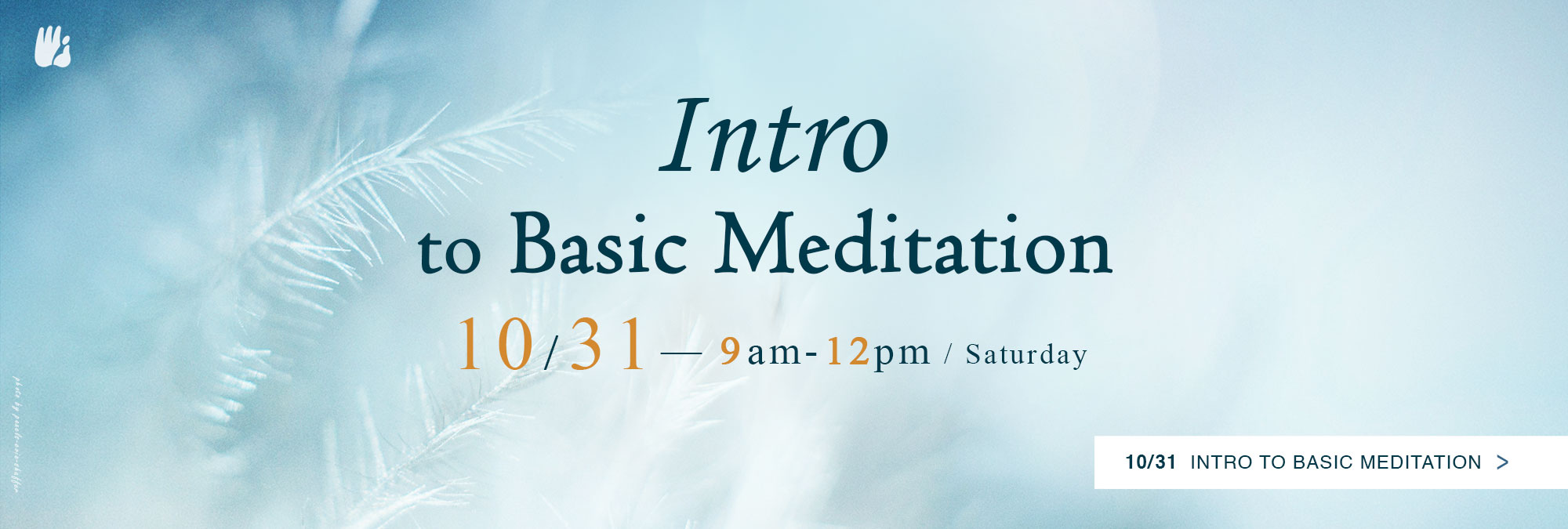
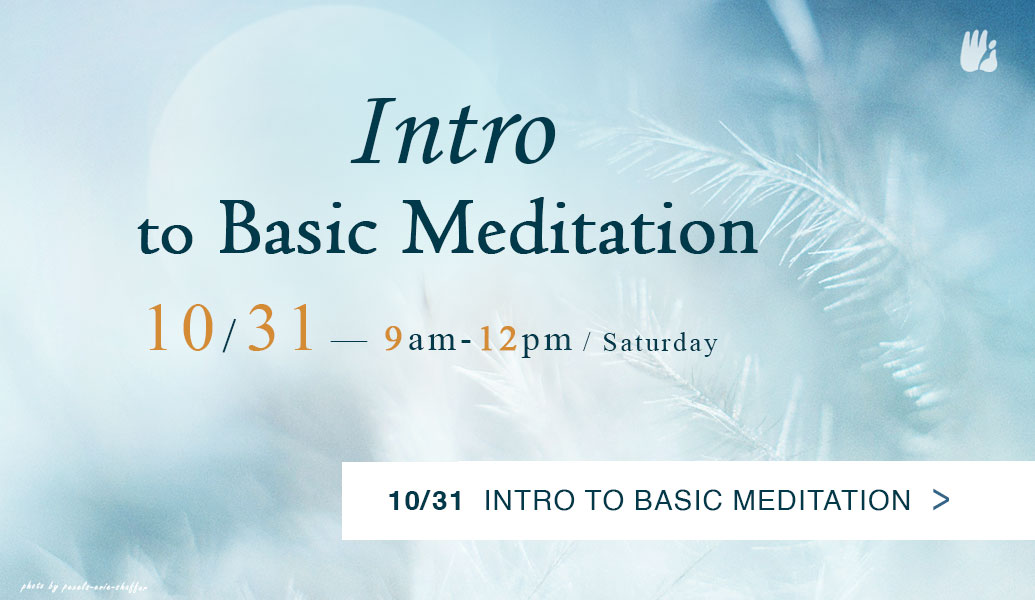
  • Intro to Basic Meditation
    1/31   .    9:00AM - 12:00PM     at CMC
  • LED BY  DIRECTOR VEN. CHANG HWA 常華法師
  • Passing on the Lamp
    2/7-8     Sat. - Sun     9:00AM - 5:00PM     at CMC
  • Group Sitting Practice
    2/14     Sat.     9:00AM - 12:00PM     at CMC
  • NEW TO MEDITATION?
    ABOUT CMC

    Chan Meditation Center (CMC) is a place of serenity and self-cultivation, learning and living the Buddha's teachings
    through the Dharma Drum Lineage of Chan Buddhism, established by late Chan Master Sheng Yen in 1979
    with the purpose of bringing Chinese Chan [Zen] Buddhism to the Western world.
    We welcome all those interested in meditation and the study and practice of Buddhism,
    regardless of background, age, or ethnic origin.
    more >

    Chan Meditation Center (CMC) is a place of serenity and self-cultivation, learning and living the Buddha's teachings through the Dharma Drum Lineage of Chan Buddhism, established by late Chan Master Sheng Yen in 1979 with the purpose of bringing Chinese Chan [Zen] Buddhism to the Western world. We welcome all those interested in meditation and the study and practice of Buddhism, regardless of background, age, or ethnic origin.
    more >